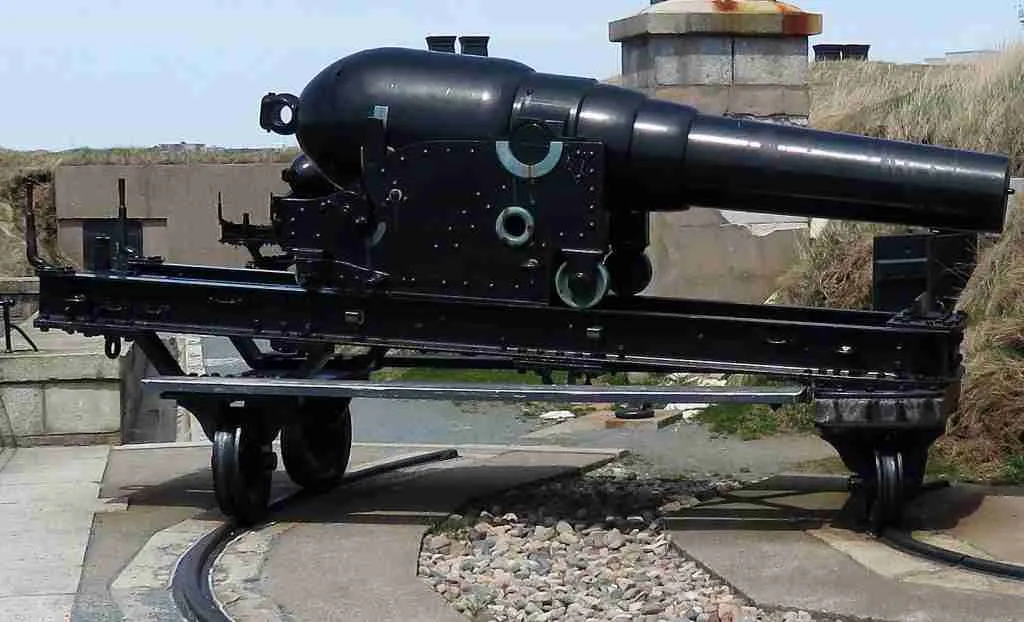
During the second half of the 19th Century the British designated four of their key ports with dockyards as being Fortresses. The location of these well defended harbours reflects the Eurocentric nature of British strategic concerns at that time, largely concentrated around the North Atlantic and Mediterranean Seas. The four Fortresses were in general terms:
HALIFAX
In 1749 the British imported large numbers of Protestant settlers into the Halifax area, producing an immediate conflict with the Catholic Acadians and Mi’kmaq because this action breached earlier treaties. The French assisted the Indian forces in this conflict, leading to the establishment of Halifax as an operational base for the British military, with its’ excellent harbour. British fortifications were erected at Citadel Hill in Halifax (1749), Fort Sackville in Bedford (1749), Dartmouth (1750), and Lawrencetown (1754). The Father Le Loutre’s War continued until 1755 when the Mi’kmaq, Acadians and French were defeated in the Battle of Fort Beauséjour.
The large anchorage at Halifax and the ability to defend it led the British to expand their defence of this anchorage. In 1758-59 the Royal Naval Dockyard was built which continued to operate until 1905. The dry dock at Halifax was only built in 1887, while the graving dock, coaling facilities and torpedo boat slip way were all built between 1881 and 1897.
Halifax became the shared anchorage for the British warships who spent their wintertime in Bermuda and summer in Halifax.
By the 1820s the British had decided that they needed to plan and prepare fixed defence to protect the dockyard and anchorage at Halifax. The anchorage was guarded by a number of fortifications including the Halifax Citadel, a number of batteries at Point Pleasant, five forts/batteries on McNabs Island, Fort Charlotte on Georges Island, Fort Needham, Fort George, For Clarence in Dartmouth and York Redoubt.